Most organisations are not short on content. In fact, the opposite is usually true. Training libraries grow every year. Video production becomes faster. Completion rates look healthy on dashboards.
Yet behaviour does not change at the same pace.
This disconnect is rarely caused by a lack of information. It is more often the result of how that information is structured and whether it is designed to move beyond exposure.
You don’t have a content problem.
You have an action problem.
Exposure Is Not Application
Watching something is passive. Using something is active. That difference matters more than most teams realise.
Research in cognitive psychology and learning science consistently shows that retrieval and practice strengthen memory far more effectively than exposure alone. Simply seeing or hearing information does not create durable learning. The act of recalling it, applying it, or using it in context is what reinforces neural pathways and makes knowledge usable.
This is why well-designed learning environments include structured opportunities for practice, not just polished content. When learners retrieve information rather than re-read it, retention improves significantly. When they apply knowledge to a realistic scenario, the likelihood of transfer increases.
The gap between knowing and doing is not accidental. It is predictable.
The Fragmentation Problem
When training lives as isolated assets, it stays fragmented.
A standalone video may explain a concept clearly. A slide deck may outline a process in detail. A document may describe best practices thoroughly. But without intentional sequencing, reinforcement, and feedback loops, those pieces remain disconnected from performance.
There is no progression.
There is no reinforcement.
There is no structure guiding someone from awareness to competence.
In those cases, information remains separate from action.
Learning research has long demonstrated that sequencing and scaffolding matter. Objectives provide direction. Logical progression builds comprehension gradually. Reinforcement prevents decay. Without these elements, even high-quality content struggles to create meaningful change.
This is not a production issue. It is a design issue.
The Cost of Designing for Exposure
When training is designed primarily for delivery rather than application, it becomes difficult to measure impact in performance terms. Completion metrics may improve, but capability does not necessarily follow.
Over time, this turns training into a cost centre rather than a performance driver. Teams invest in creating more assets, assuming volume will solve the problem. Yet the underlying challenge remains unaddressed: the absence of structured learning pathways that move people from input to action.
The real shift happens when the question changes.
Instead of asking, “How do we create more content?”
Start asking, “How do we make this usable?”
That question reframes the entire approach.
What Actually Improves Outcomes
Performance improves when learning is structured around clear objectives and aligned with real tasks. It improves when information is sequenced intentionally rather than delivered as a collection of files. It improves when reinforcement is built into the experience, not left to chance.
Systems consistently outperform standalone pieces because they create continuity. They connect exposure to practice, practice to feedback, and feedback to improvement.
This does not mean content is unimportant. Content is the raw material. But structure is what transforms that material into something functional.
Designing for action means thinking beyond the asset and considering the full experience. It means building learning that moves — from input to practice, from understanding to performance.
From Knowledge to Capability
The ultimate goal of training is not awareness. It is capability.
Capability requires that knowledge be accessible, reinforced, and applied. It requires that learners understand not just what something is, but how and when to use it.
When learning is designed as a system rather than a series of isolated pieces, that shift becomes possible. Knowledge stops being something consumed and becomes something activated.
And that is where transformation happens.
Put It Into Practice
Designing for action requires tools that support structure, progression, and reinforcement, not just creation.
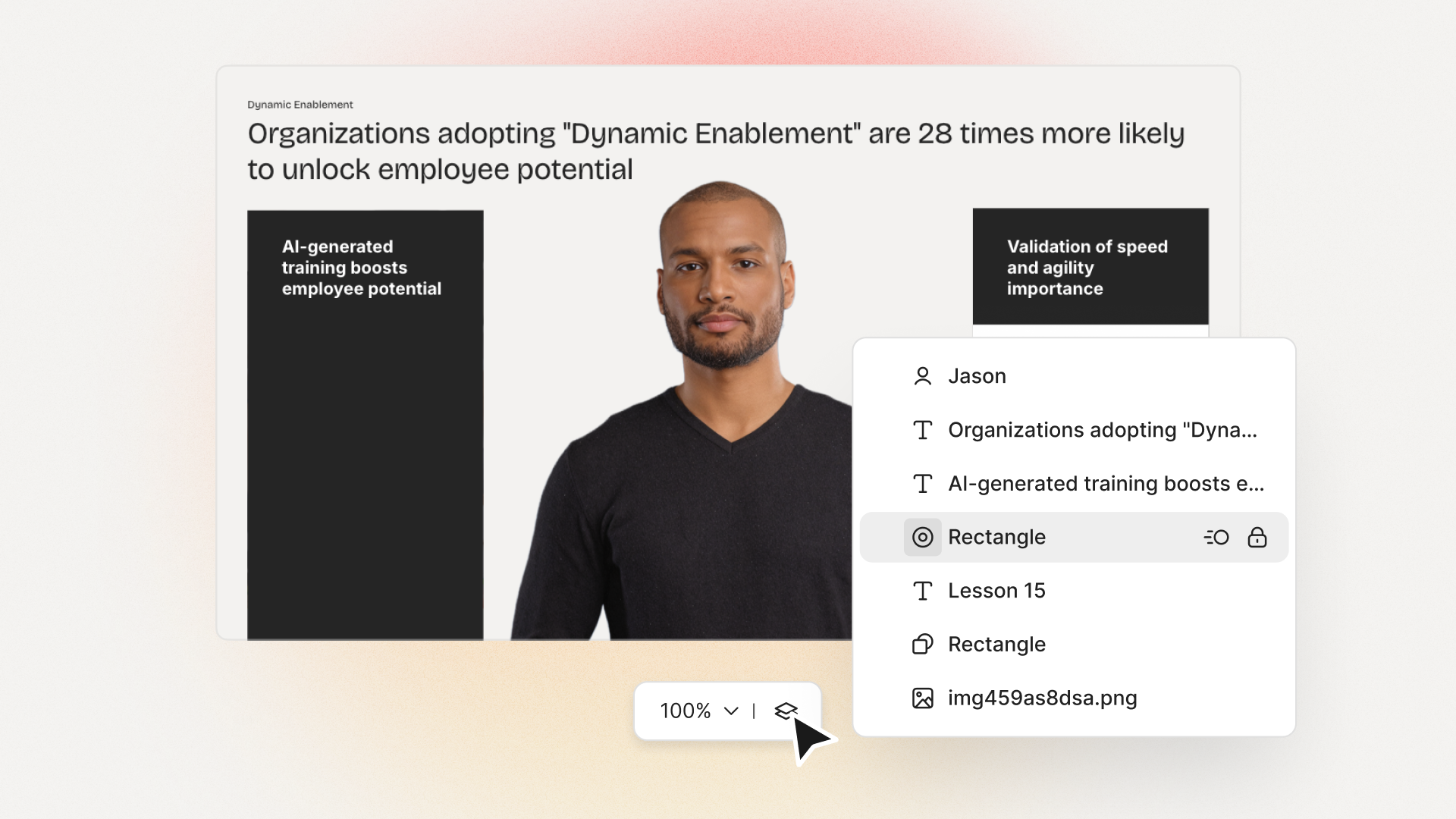
Colossyan helps teams move beyond isolated content by turning documents, slides, and raw knowledge into structured learning experiences. Instead of producing another standalone asset, you can build sequenced programs that are designed for application from the start.
If you are ready to move from exposure to execution, start building in Colossyan and design learning that drives action.







.avif)





%20(1).avif)



.webp)
.webp)