Translating video content to English is no longer just a technical wish-list item - it’s a business need. Most of the world doesn’t speak English natively, but for many companies, English is still the training and support language that ties global teams together. Translating team training, onboarding, or product demos to English increases reach, boosts accessibility, and helps people actually understand and retain content.
Here’s how the process works, what to expect from popular tools, and how at Colossyan, we tackle end-to-end video translation to English for real organizational needs.
Why translate to English now
Only about 10% of the world speaks English natively, yet most global organizations choose it as the default for internal communication, training, or customer support. Teams using bilingual or translated training see ~15% productivity increases. This isn’t just about compliance - it has a real effect on how quickly people get up to speed.
The engagement stats are strong. 63% of Millennials and Gen Z prefer watching videos with subtitles, and 80% of Gen Z specifically say they’d rather have subtitles. Translating to English and including captions isn’t optional for these audiences.
Discovery matters, too. Translating videos means they get indexed in more languages, show up in more search results, and reach wider markets. It opens up more of the world, literally.
How automatic video translation works
This process is simple in theory. Here’s what happens behind the scenes in any serious auto-translation flow:
1. Speech to text: The software listens to the video and creates a transcript in the original language.
2. Translate: The transcript is then machine translated to English.
3. Output: You choose if that translation appears as English subtitles (SRT, VTT captions added or exported separately), or as an English dub/voiceover - sometimes using AI voice cloning for a natural feel, and matching lip movements if needed.
4. Final review: Brand names, technical terms, number formats, and critical info get checked, then you export the finished MP4 and caption files.
Subtitles, dubbing, or avatars - which fits your needs?
Subtitles only is the fastest route. For Gen Z and Millennial audiences or for accessibility, SRT/VTT captions are often enough. You can add those to YouTube, internal knowledge sites, or share via LMS.
AI dubbing overlays English audio. It works best for people who prefer listening over reading - think compliance or hands-free training.
Avatar/presenter re-creation (which Colossyan supports) means the video itself gets rebuilt using AI avatars, in English, synced with your brand’s look and tone. This is ideal for consistent internal training, updates, and scalable learning.
What other tools claim to offer
The auto-translation space is crowded, but most tools have limits:
VEED: Offers translation to 125+ languages, voice-matched dubbing in 29, up to 99.9% subtitle/translation accuracy, and premium 4K output. Testimonials claim about 60% less editing time.
Vidnoz: Free 90-second translations; AI voice cloning and lip sync in 140+ languages. Full features are premium, up to 800 min/month - no audio-only files.
Clideo: Browser-based, subtitles and AI voiceover to English, customizable fonts/colors, SRT/TXT download. Free tier has many options, paid removes watermarks.
Kapwing: Supports 100+ subtitle languages, flexible rules for brand names and pronunciation, subtitle search/replace. Millions use it for fast video localization.
Adobe Firefly: Dubs in 20+ languages, but limited to 5-minute clips. Enterprise lip-sync, up to five target languages at once.
HeyGen: 175+ languages, “hyper-realistic” lip sync, glossary for brand terms, rapid campaign localization; strong enterprise use case.
But if you need full control (branding, compliance, scalable L&D delivery), these tools often force workarounds: limited editing, watermarked exports, or manual syncing across formats.
How to translate videos to English in Colossyan
If you handle training, onboarding, or regular content translation, you need more than basic subtitle tools. Here’s how I would do it in Colossyan:
1. Prepare your assets
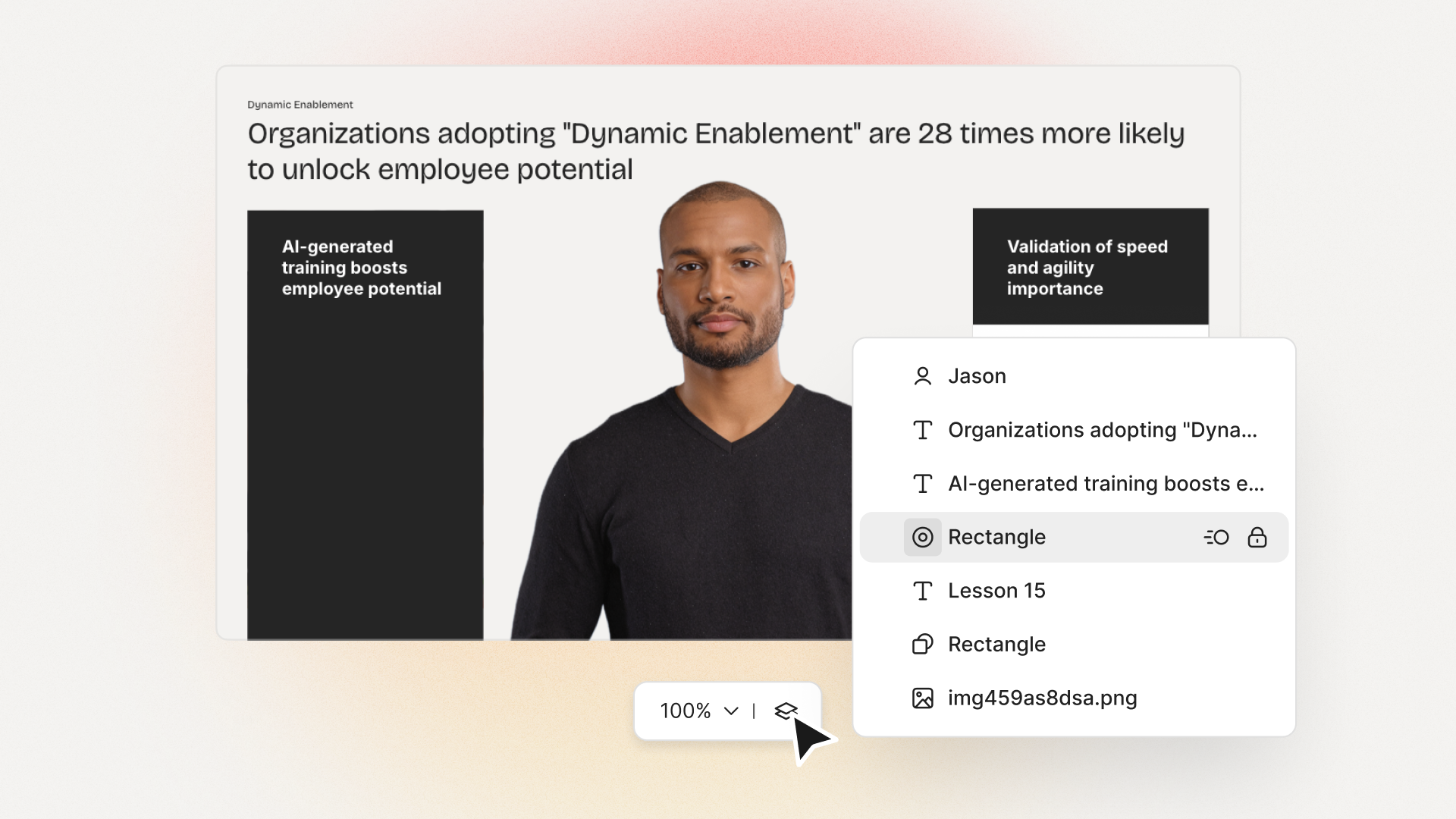
Start with your original content - video, slides, scripts, or subtitles (SRT/VTT). If you have a PowerPoint or PDF, import it; each slide becomes a scene, speaker notes become the script.
2. Structure your video
In Colossyan, each slide or part of your script can map to a video scene. You can drop in extra visuals, assign avatars, and structure it exactly like your original.
3. Translate everything to English
With Instant Translation, you click “Add New Language Variant,” select English, and the system auto-translates all on-screen text, scripts, and interactions. You get two versions (original and English) to tweak separately, so nothing breaks if English text runs longer.
4. Assign voices or avatars
Pick a natural English voice from our options, or use your cloned voice for brand consistency. Adjust tone, pacing, and even subtle style points if you want that layer of control. You can keep avatars for a human touch, or use just narration.
5. Fix tricky brand terms
Certain brand names, acronyms, or product jargon don’t translate well. Our Pronunciations tool lets you lock down how anything is said - so “PPE” always sounds right across all English dubs.
6. Sync, polish, and preview
Check that everything looks and sounds natural: pause points, subtitle timing, scene pacing, and visual alignment. Preview the entire workflow right in Colossyan without downloading drafts.
7. Export (and distribute)
Choose your export: regular MP4, English SRT/VTT, or SCORM 1.2/2004 files for LMS upload. With SCORM, you set pass scores and track completion - compliance solved.
8. Measure, then refine
With built-in analytics, see what parts people watch, where they drop off, or which quiz questions trip them up. Use that data to improve future English drafts.
Quality checks - what i always look for
- Numbers, dates, legal terms, and technical details must be checked. These trip up raw machine translation.
- Brand terms need their custom pronunciation set.
- Subtitles stay within 42 characters per line, display long enough to read, and don’t cover UI.
- Dubs should match the intended formality (friendly for HR? serious for compliance?).
- English text often expands; adjust layouts in your English variant for a polished look.
- Accessibility - always export SRT/VTT and check color contrast.
Common pitfalls and how to dodge them
- Mispronounced terms: Always set Pronunciations before you export.
- Mismatched pacing: Add script pauses and tweak caption timing.
- Lip-sync issues: For small faces or voiceover-only videos, skip lip sync and use narration instead.
- Watermarks on free tiers: Plan and budget for serious content.
- Audio-only files not accepted: Some tools require video inputs (not a problem in Colossyan - just build the video from your scripts).
When to use other tools
If you want fast browser-only subtitle edits, Clideo works fine. For TikTok-length clips, Adobe Firefly does batch dubs. For ultra-broad lip-sync and volume, HeyGen or Vidnoz handle huge language sets, with some technical tradeoffs. But for most companies creating scalable, on-brand English training, L&D, or onboarding videos - especially with interactivity and SCORM compliance - you need Colossyan’s complete workflow.
SEO tips for translated videos
Don’t overlook the basics: use relevant keywords in English in your title and description, upload English SRT/VTT for indexable captions, and publish both the original and English-translated videos. This gets your content in front of more people. Make sure on-screen visuals reinforce your brand in both versions for better search results.
Conclusion
Translating video language to English is practical, measurable, and increasingly expected by global audiences. I see companies speed up training launches, increase team engagement, and avoid old pitfalls by using the right tools.
With Colossyan, you get auto-translation, voice selection or cloning, brand pronunciation management, SCORM and analytics - plus real organizational workflows that help you publish, track, and refine English versions at scale and with confidence. For any company serious about L&D or clear English outreach, this matters. And it’s simpler than most people think.







.avif)


%20(1).avif)



.webp)
.webp)