Enterprise Learning & Development is at a crossroads. The traditional model of static PowerPoints, lengthy modules, and one-size-fits-all training struggles to keep pace with a distributed, diverse, and demanding workforce. Low completion rates, poor knowledge retention, and a widening gap between learning and on-the-job performance are common symptoms. The problem isn't just the content; it's the delivery mechanism.
This isn't about digitizing old materials. It's about fundamentally rethinking how we teach. The solution lies in applying proven instructional design best practices, but with a modern, video-centric approach. The core argument we'll explore is that combining these established principles with the speed, scale, and engagement of AI video tools like Colossyan is no longer an innovation, it’s a necessity for impactful corporate training. For a comprehensive understanding of current methodologies, exploring 8 essential instructional design best practices for 2025 provides valuable insights to transform your training.
This article moves beyond theory to provide a prioritized, actionable collection of strategies tailored for enterprise L&D. We will break down 10 critical instructional design best practices, from scenario-based learning and microlearning to data-driven assessment and cognitive load management. For each principle, we'll demonstrate how the bottleneck isn't the principle itself, but the traditional tools used to implement it. You will learn how pairing these best practices with an AI video platform like Colossyan builds training that not only informs but also engages, scales, and delivers measurable performance improvements.
1. Scenario-Based Learning (SBL)
Scenario-Based Learning (SBL) moves beyond abstract theory by placing learners in realistic, contextual situations that mirror their day-to-day job challenges. Instead of passively receiving information, learners actively engage with narratives where they must make decisions, solve problems, and experience the direct consequences of their choices. This "learning by doing" approach is a cornerstone of modern instructional design best practices, as it significantly boosts knowledge retention and application.
This method is particularly effective for training complex soft skills, critical thinking, and compliance protocols where nuanced judgment is key. For example, a financial services firm might use SBL to train advisors on regulatory compliance through interactive customer scenarios, or a healthcare organization could simulate difficult patient interactions to improve communication protocols. The goal is to create a safe space for learners to practice and fail without real-world risk.
How to Implement SBL in Your Training
Creating effective SBL, especially with video, has historically been resource-intensive. Your team already knows the principles, but the tools—live-action filming, complex authoring software—make it slow and expensive to scale. This is the execution gap. AI-powered platforms like Colossyan close this gap by allowing you to easily create branching video scenarios with AI avatars. This empowers instructional designers to build multiple decision paths and feedback loops without the cost and complexity of traditional video production, turning a bottleneck into an efficient workflow.
Actionable Tips:
Ground Scenarios in Reality: Base your narratives on actual job incidents, common employee mistakes, or frequent customer complaints to ensure authenticity and relevance.
Manage Branching Logic: Keep decision trees manageable. Limit each scenario to 3-4 critical decision points to avoid overwhelming the learner and complicating development.
Provide Immediate Feedback: After each choice, deliver specific, constructive feedback that explains the consequences and reinforces the correct procedure.
Leverage AI for Scalability: Use Colossyan's branching scenario feature to produce multiple avatar-led paths. You can quickly create variations for different roles or update content as policies change, making your SBL agile and cost-effective.
Analyze Learner Paths: Track which routes learners take most often. This data can reveal common knowledge gaps or areas where your training needs reinforcement.
By embedding learning within practical, decision-driven stories, SBL bridges the gap between knowing and doing, ensuring your team is prepared for real-world challenges. To see how this can be applied using modern tools, explore this guide on how to create engaging video scenarios using AI avatars.
2. Microlearning
Microlearning breaks down complex topics into focused, bite-sized content modules, each targeting a single learning objective. Instead of lengthy courses, learners engage with short, digestible segments, typically lasting 2-5 minutes, that fit easily into busy work schedules. This "just-in-time" learning approach is a fundamental instructional design best practice, aligning with how modern employees consume information and boosting knowledge retention through focused delivery.
This method excels in fast-paced environments where employees need quick answers or skill refreshers. For example, a software company can deliver two-minute video walkthroughs for new feature updates, or a retail brand can train staff on new product knowledge using three-minute segments accessible on the sales floor. The goal is to provide immediate, relevant information at the moment of need, minimizing disruption and maximizing application.
How to Implement Microlearning in Your Training
The challenge with microlearning isn't creating one video; it's producing and maintaining an entire library of them at scale. Traditional video production workflows make this impractical. AI video generation tools fundamentally change this dynamic. By integrating a platform like Colossyan into your existing L&D tech stack, you can rapidly produce, update, and translate hundreds of professional-quality microlearning videos. This transforms a production bottleneck into an efficient, repeatable workflow, enabling you to build comprehensive learning paths from dozens of micro-modules without the typical overhead.
Actionable Tips:
Define One Core Takeaway: Each microlearning unit must have a single, clear learning objective. If you can't summarize its purpose in one sentence, the scope is too broad.
Design for Mobile-First: Assume learners will be on their phones. Ensure text is legible, visuals are clear, and videos play correctly in a vertical or horizontal format.
Create Visual Variety: Even in a two-minute video, use a mix of AI avatars, text overlays, and screen recordings to maintain engagement and illustrate key points.
Bundle into Learning Paths: Organize individual micro-modules into structured series or "playlists" that guide learners through a larger topic progressively.
Leverage AI for Agility: Use Colossyan to create microlearning videos at scale. When a process or feature changes, you can edit and regenerate the video in minutes, keeping your content library current.
Translate for Global Teams: Utilize Colossyan's auto-translation feature to quickly create multilingual versions of your micro-content, ensuring consistent training across all regions.
By delivering learning in focused, on-demand bursts, microlearning empowers employees with the knowledge they need, precisely when they need it. To learn more about how AI can accelerate your content creation, explore how to produce training videos at scale.
3. Spaced Repetition and Retrieval Practice
Spaced Repetition is a learning science principle that combats the natural "forgetting curve" by re-introducing content at increasing intervals over time. Instead of cramming information, learners are strategically re-exposed to key concepts, moving knowledge from short-term recall to long-term memory. This method, combined with retrieval practice (actively recalling information from memory), is a powerful instructional design best practice for ensuring lasting learning.
This approach is essential for high-stakes knowledge that must be retained with accuracy, such as regulatory compliance, complex product specifications, or critical safety procedures. For example, a pharmaceutical sales team might use spaced repetition to master drug interaction data, while a manufacturing plant could reinforce safety protocols through scheduled quizzes. The core idea is to interrupt the forgetting process before it takes hold.
How to Implement Spaced Repetition in Your Training
Executing a spaced repetition strategy has become much simpler by combining modern video tools with your existing Learning Management System (LMS). The problem isn't the LMS; it's creating the engaging source content needed to make the repetition effective. You can use Colossyan to create the initial, high-impact video-based learning module that introduces the core content. This video serves as the "source of truth" that learners will be prompted to recall information from later.
Your LMS then handles what it does best: automatically sending out short retrieval practice quizzes or micro-learning reminders at predetermined intervals. By pairing engaging AI-generated video content created in Colossyan with the automation of your LMS, you create a seamless and scalable system that significantly enhances knowledge retention without manual effort.
Actionable Tips:
Establish a Schedule: Start with an initial review within 24-48 hours, then schedule subsequent retrieval activities at intervals like one week, one month, and three months.
Focus on Retrieval, Not Re-watching: Design quizzes or short-answer questions that force learners to actively recall information from the original Colossyan video, rather than just passively re-watching it.
Automate with Your LMS: Leverage your LMS's quiz and notification features to automatically deliver spaced retrieval prompts. This ensures consistency and reduces administrative burden.
Prioritize Critical Content: Apply spaced repetition to the most vital information, such as compliance rules, safety steps, or key value propositions that employees must know flawlessly.
Analyze Performance Data: Use quiz results to identify topics where learners are struggling. This data can inform you to adjust the spacing interval or create a new Colossyan video to reinforce the concept.
By systematically revisiting critical information, spaced repetition and retrieval practice ensure that training investments translate into durable, long-term knowledge that your team can apply when it matters most.
4. Personalization and Adaptive Learning Paths
Personalization moves training away from a one-size-fits-all model by tailoring learning experiences to individual needs, roles, and performance. Instead of forcing every employee through the same rigid curriculum, this approach customizes content based on factors like job function, experience level, and even preferred language. This is a core instructional design best practice because it makes training more relevant, engaging, and efficient, ensuring learners receive the specific knowledge they need to succeed.
This method is crucial for global enterprises with diverse workforces. For instance, a tech company can personalize onboarding videos for its sales and engineering teams, focusing on relevant tools and workflows for each. Similarly, a multinational manufacturing firm can deliver safety training videos automatically translated into the native languages of its various plant locations, ensuring universal comprehension and compliance. The goal is to make every learner feel the content was designed specifically for them.
How to Implement Personalization in Your Training
Historically, creating personalized content at scale was a logistical nightmare. The desire was there, but the tools made it impossible. Today, AI-driven platforms make this highly scalable. By integrating Colossyan with your LMS and other systems, you can create a single master video and effortlessly generate dozens of variations. By changing an AI avatar, translating the script with one click, or updating on-screen text, you can tailor content for different roles, regions, and languages in minutes, not weeks, finally making true personalization achievable.
Actionable Tips:
Start with Role-Based Paths: The easiest and highest-impact way to begin is by creating distinct learning paths for different job functions (e.g., sales vs. support).
Leverage AI for Localization: Use Colossyan's auto-translation feature to produce videos in over 80 languages, making global training initiatives truly accessible and localized.
Use Templates for Consistency: Create branded templates for different departments. This ensures a consistent look and feel while allowing for role-specific content adjustments.
Integrate with Your LMS: Use learner profiles within your Learning Management System to track performance and preferences, which can inform how you assign personalized content.
Scale with an API: For large-scale dynamic personalization, integrate Colossyan's API to automatically generate custom videos based on learner data stored in your internal systems.
Analyze Engagement Data: Track which personalized versions of your training videos perform best. This data provides valuable insights into what resonates with different learner segments.
By tailoring the learning journey, you drastically increase relevance and knowledge retention, proving that the training investment directly supports individual and organizational performance. To learn more about scaling video production for personalized training, explore how Colossyan's API can automate and customize your content creation.
5. Multimedia and Modality Effect
The Multimedia and Modality Effect, rooted in Richard Mayer's cognitive theory of multimedia learning, confirms that people learn more deeply from words and pictures than from words alone. This principle doesn't mean simply adding more media; it's about strategically combining visuals and narration to engage both the brain's auditory and visual processing channels. This dual-channel approach minimizes cognitive load and maximizes comprehension, making it one of the most powerful instructional design best practices.
This principle is why top educational content, from Khan Academy's narrated tutorials to Apple's animated product videos, is so effective. For corporate training, this translates to moving away from text-heavy slides. Instead, an avatar-narrated video can demonstrate a complex software workflow while explaining the steps, or a medical training simulation can use an AI presenter to guide learners through a procedure. The key is coordinating the audio and visual elements so they complement, not compete with, each other.
How to Implement Multimedia and Modality in Your Training
Applying these research-backed principles no longer requires a full production studio. AI video platforms like Colossyan are built to leverage the multimedia effect by making it simple to create content where visual and auditory elements are perfectly synchronized. Instead of struggling with separate audio recording, video editing, and graphic design tools, Colossyan integrates these functions. You can pair a professional AI avatar with on-screen text, animated visuals, and screen recordings to build a cohesive and impactful learning experience that holds attention and improves retention.
Actionable Tips:
Synchronize Words and Pictures: Ensure your narration directly relates to the visuals on screen at that exact moment. Avoid showing one concept while talking about another.
Use Narration to Enhance, Not Read: Don't have your narrator simply read on-screen text verbatim. Use the audio to explain, elaborate, and add context to the visuals.
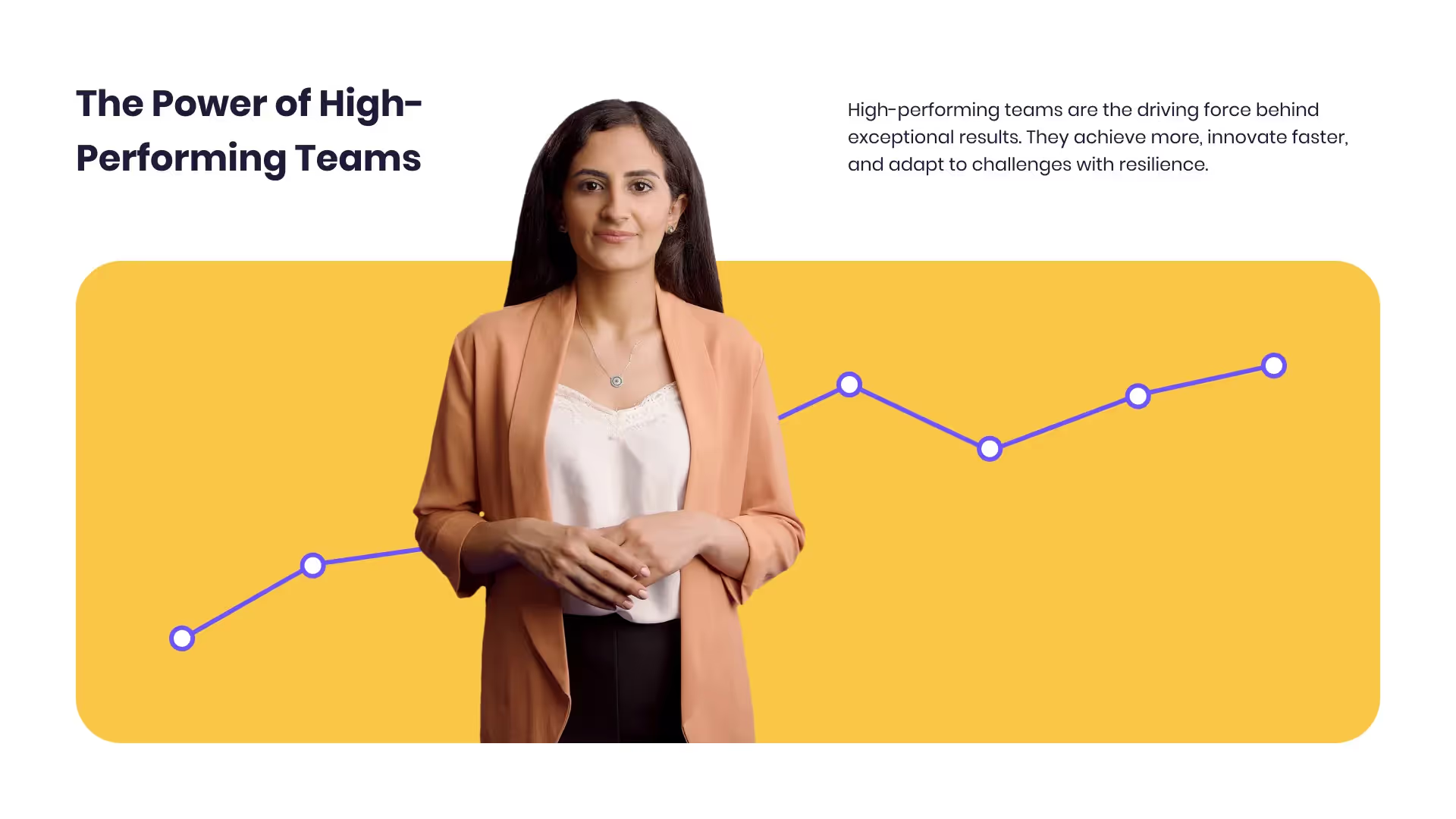
Leverage AI Avatars for Connection: Use Colossyan's realistic AI avatars to add a human element. Choose an avatar whose appearance and tone match your audience and content.
Manage Visual Complexity: Avoid cluttering the screen. A clean, focused visual paired with clear narration is more effective than a screen packed with distracting elements.
Include Captions: Add captions to reinforce key terms and ensure your content is accessible to all learners, including those in noisy environments or with hearing impairments.
By thoughtfully combining visual and auditory information, you create a learning experience that is more engaging, efficient, and memorable. To dive deeper into the science, you can create research-backed AI video training using Mayer's 15 principles and apply them directly to your content strategy.
6. Immediate and Specific Feedback
Immediate and specific feedback is one of the most powerful catalysts for learning, closing the gap between action and understanding in real-time. Instead of letting learners wait until a course ends to discover their mistakes, this practice provides instant correction and reinforcement right after a decision or assessment. This immediacy prevents misconceptions from taking root and transforms assessments from simple tests into powerful learning tools.
This method is crucial for building skills where precision is key, such as compliance training, software tutorials, and customer service protocols. For example, a compliance module can show the immediate regulatory consequence of a wrong choice, while a software simulation can provide instant guidance when a user clicks the wrong button. The goal is to create a responsive learning environment that guides, corrects, and reinforces knowledge at the most teachable moments.
How to Implement Immediate and Specific Feedback
Delivering instant, personalized feedback in digital learning used to be complex. Today, video-based tools make it seamless and scalable. Authoring tools can be clunky, and text-based feedback lacks impact. Platforms like Colossyan integrate interactive elements directly into video, allowing you to build quizzes and branching paths where feedback is delivered by an AI avatar immediately after a learner's response. This approach makes the feedback feel more personal and conversational, which significantly boosts engagement and retention.
Actionable Tips:
Explain the "Why": Don't just state that an answer is incorrect. Craft feedback that explains why it's wrong and links back to the core learning objective.
Reinforce Correct Answers: Use positive reinforcement to validate correct choices. Briefly explain why the answer was right to solidify the learner's understanding.
Leverage AI for Instant Delivery: Use Colossyan's quiz functionality to automatically trigger avatar-led feedback for each answer option. This ensures every learner gets a tailored response without manual intervention.
Keep Feedback Concise: Deliver feedback in short, easy-to-digest statements. Avoid long paragraphs that can overwhelm the learner and disrupt the flow of the training.
Use a Conversational Tone: Write feedback messages as if a real coach were speaking. A friendly, supportive tone makes corrective feedback more effective and less discouraging.
Test and Refine: Pilot your feedback with a small group of learners to ensure it is clear, helpful, and motivating. Use analytics to see which questions generate the most incorrect answers and refine the feedback accordingly.
By integrating immediate and specific feedback into your courses, you accelerate the learning cycle and empower employees to master new skills with confidence and accuracy. This best practice is fundamental to creating training that truly drives performance improvement.
7. Storytelling and Narrative Structure
Storytelling embeds learning content within compelling narratives that create emotional connection, improve retention, and make abstract concepts concrete. Rather than just presenting facts, stories show concepts in action through character experiences, challenges, and resolutions. This ancient teaching method is highly effective; stories activate more brain regions than straightforward information delivery, making content more memorable and relatable.
This instructional design best practice is powerful for any training, from onboarding to leadership development. A new hire can learn company culture through a narrated story about how a team overcame a major obstacle, rather than reading a list of values. To effectively engage learners, consider incorporating narrative structures and stories, which can make content more relatable and memorable. The goal is to show learners 'what good looks like' in a context they can easily recall on the job.
How to Implement Storytelling in Your Training
Creating character-driven narratives, especially for video training, no longer requires a large production team or budget. The challenge has always been bringing characters to life without actors and film crews. Modern AI tools make it simple to craft engaging stories that resonate. Using a platform like Colossyan, you can assign different AI avatars to embody characters in your training, each with distinct voices and personalities. This allows you to build out compelling onboarding journeys or compliance scenarios with ease, ensuring your narrative is both immersive and scalable.
Actionable Tips:
Start with a Relatable Character: Begin your story with a character and a clear challenge that your audience will recognize from their own work lives.
Make the Stakes Clear: Explain why the story's outcome matters. What is at risk for the character or the company? This creates tension and captures attention.
Use AI Avatars as Characters: Leverage Colossyan to create a diverse cast of AI avatars to play roles in your training stories. This increases relatability and visual engagement without logistical complexity.
Connect Resolution to the Job: Ensure the story’s conclusion directly ties back to a key learning objective and provides a clear model for learners to follow.
Test for Relatability: Share draft stories with a small group of employees to ensure the characters, conflicts, and language feel authentic to their experience.
8. Active Learning and Hands-On Practice
Active learning transforms learners from passive recipients into engaged participants who solve problems, make decisions, and create tangible outputs. Instead of simply watching or listening, learners interact directly with the material, a method proven to dramatically increase knowledge retention and skill acquisition. This principle of "learning by doing" is fundamental to effective instructional design best practices, especially for training that aims to change behavior or develop complex skills.
This approach is indispensable for skill-based training where practical application is the end goal. Examples range from flight simulators and medical labs where trainees practice complex procedures in a safe environment, to coding bootcamps that require continuous hands-on programming. The core idea is to bridge the gap between theoretical knowledge and real-world execution by providing a space for learners to practice, fail, and refine their abilities without high-stakes consequences.
How to Implement Active Learning in Your Training
Traditionally, creating hands-on practice, especially for digital or soft skills, required complex software or in-person role-playing. Now, AI-driven video tools make it easier to build these experiences at scale. Instead of relying solely on a separate simulation tool, you can build active learning directly into the content itself. For instance, use Colossyan to create a video demonstrating a process, then leverage its branching scenario feature to require learners to make decisions and practice what they've just seen. This creates an interactive feedback loop within the training module itself.
Actionable Tips:
Scaffold the Practice: Start with guided, step-by-step instructions and gradually reduce support as the learner gains confidence and competence.
Create a Safe Environment: Emphasize that the practice activities are a space to learn from mistakes without fear of negative real-world repercussions.
Use Video for Demonstration: Leverage AI-generated video with Colossyan to clearly demonstrate a task or process, then immediately prompt the learner to apply it in a related activity.
Implement Decision-Making Scenarios: Build interactive branching scenarios where learners must apply their knowledge to solve a problem, reinforcing the practical application of the content.
Connect Practice to Job Tasks: Ensure all hands-on activities directly mirror the tools, software, and challenges employees will face in their daily roles.
Analyze Learner Performance: Use analytics to track how learners navigate practice scenarios. This data can pinpoint common areas of struggle and highlight where additional support is needed.
By integrating active, hands-on practice, you ensure that learning is not just consumed but applied, making your training more impactful and effective. To see how AI is revolutionizing this, learn more about the 5 ways AI simulation is closing the skills gap.
9. Assessment and Data-Driven Design
Assessment and data-driven design transform training from a one-time event into a continuous improvement cycle. This approach moves beyond simple end-of-course exams, integrating frequent, low-stakes assessments to gauge understanding in real-time. The data gathered from these interactions doesn't just measure learner success; it provides critical insights for refining and personalizing the instructional content itself. This feedback loop is a core tenet of effective instructional design best practices, ensuring training evolves to meet both learner needs and business goals.
This method allows L&D teams to identify which modules are most effective, where learners struggle, and which segments of the audience require targeted intervention. For instance, a retail company can track product knowledge quiz scores by location to pinpoint specific stores needing more training, while a corporate LMS can flag departments with low compliance course completion rates. The goal is to make informed decisions that optimize learning outcomes and demonstrate a clear return on investment.
How to Implement Assessment and Data-Driven Design
Historically, gathering detailed learning analytics required complex integrations between content tools and a Learning Management System (LMS). Modern platforms now embed these capabilities directly, making data more accessible. By complementing your LMS data with content-specific insights from Colossyan, you can track video engagement, completion rates, and in-video quiz performance. This allows you to see precisely where learners drop off or misunderstand a concept, enabling rapid content iteration and a more complete picture of learner behavior.
Actionable Tips:
Align Assessments to Performance: Design quizzes and checks that directly mirror the skills and knowledge required for on-the-job success, not just content recall.
Use Formative Quizzes: Embed short, frequent quizzes directly within your training videos using Colossyan to reinforce key concepts and provide immediate feedback.
Track Granular Engagement: Monitor video completion rates, but also analyze viewer heat maps to see which specific sections are re-watched or skipped. This reveals your most (and least) effective content.
Segment Your Data: Analyze performance trends by role, department, or region. This can uncover systemic knowledge gaps or highlight high-performing teams whose best practices can be scaled.
Establish a Feedback Loop: Regularly review analytics with content creators and stakeholders to drive continuous improvement, ensuring your training remains relevant and impactful.
10. Cognitive Load Theory and Instructional Clarity
Cognitive Load Theory (CLT) is a fundamental principle in instructional design that focuses on the limitations of human working memory. It posits that learning is hindered when the brain is asked to process too much information at once. Effective training design minimizes "extraneous" cognitive load, the unnecessary mental effort caused by poor formatting, cluttered visuals, or confusing instructions, allowing learners to focus on the essential content.
This theory, pioneered by John Sweller, is critical because every element in your training either supports or obstructs learning. For instance, a cluttered PowerPoint slide with distracting animations and multiple fonts forces learners to expend mental energy on deciphering the layout instead of understanding the material. In contrast, Google's simple, clean interface is a masterclass in reducing cognitive load, allowing users to find information effortlessly. Applying this is a core instructional design best practice.
How to Implement CLT in Your Training
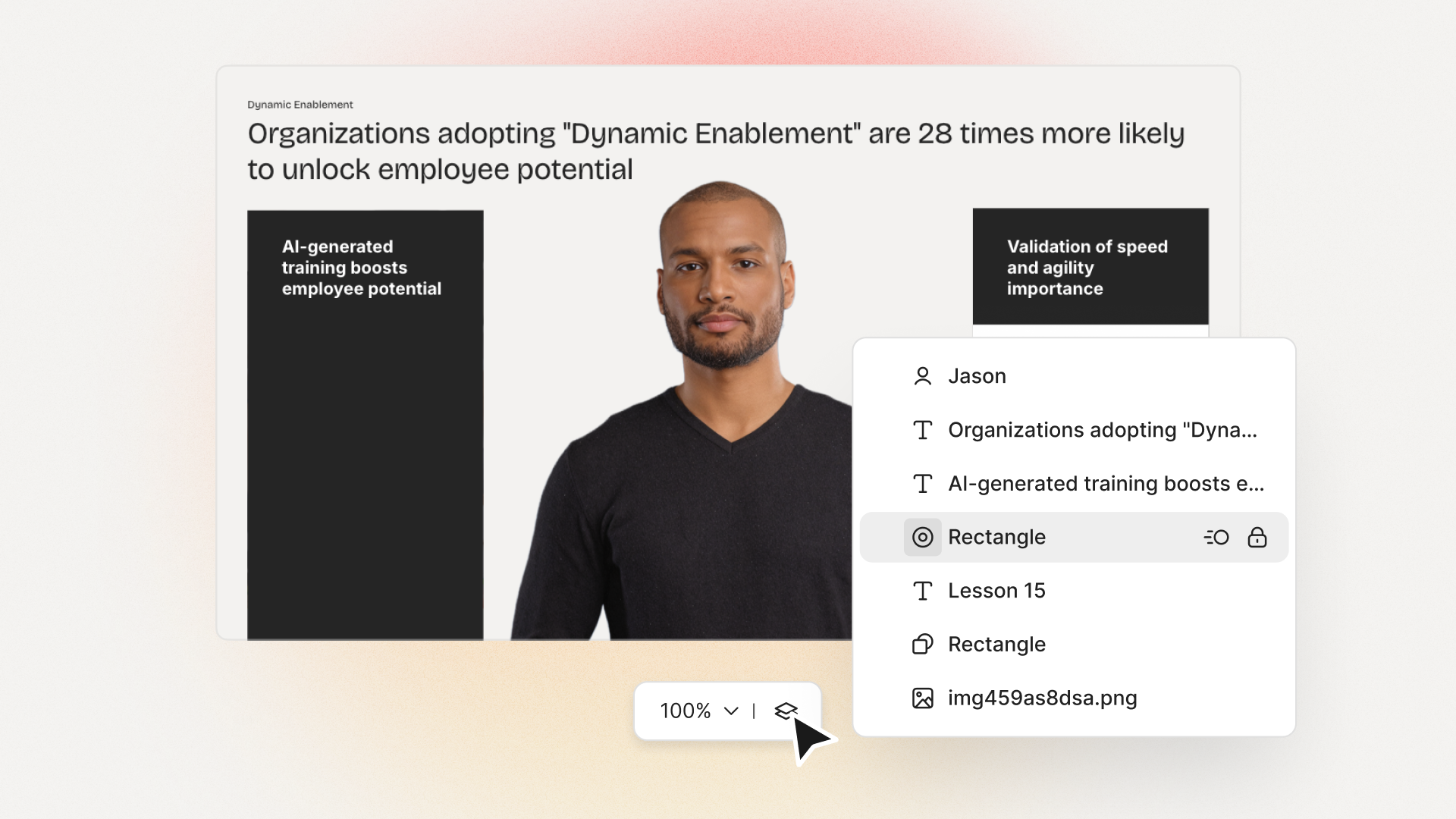
The key to applying CLT is intentional simplicity. Instead of spending hours in PowerPoint trying to perfectly align text boxes and images, modern tools allow you to produce clean, focused video content that guides the learner's attention effectively. For example, using a platform like Colossyan, you can replace a cluttered slide deck with a streamlined video featuring an AI avatar who presents information in a clear, sequential manner against a simple background. The platform handles the design, so you can focus on the content.
Actionable Tips:
Ask "Is This Essential?": Before adding any graphic, animation, or text, question if it directly contributes to achieving the learning objective. If not, remove it.
Segment Complex Content: Break down long, complex topics into a series of shorter, digestible microlearning videos (ideally 5-8 minutes). This prevents cognitive overload.
Maintain Visual Hierarchy: Design each scene or slide with a single, clear focal point. Use whitespace strategically to separate concepts and improve readability.
Use Clean Templates: Leverage Colossyan's professional templates to ensure a consistent, uncluttered design across all your training videos, which reduces extraneous load.
Synchronize Audio and Visuals: Ensure your audio narration directly corresponds with the visuals on screen. Avoid having an avatar speak too quickly or discuss a topic not yet shown.
Test with Learners: Pilot your training with a small group and ask them what parts were confusing or overwhelming. Their feedback is invaluable for identifying high-load areas.
From Theory to Transformation: Activating Your New L&D Strategy
We've explored a comprehensive roundup of instructional design best practices, from the immersive power of Scenario-Based Learning and the precision of microlearning to the foundational principles of Cognitive Load Theory and data-driven assessment. The journey through these ten pillars reveals a clear, unified theme: effective learning is not a passive act of information consumption. It is an active, engaging, and deeply human process built on proven cognitive science.
The challenge for modern L&D teams has never been a lack of knowledge about what works. The core principles of spaced repetition, active recall, and personalization have been validated for decades. The real barrier has always been one of scale and execution. How can a small team possibly create personalized video scenarios for thousands of employees across different regions? How can you rapidly convert a dense compliance document into an engaging microlearning series without a massive budget and timeline? This is where the paradigm shifts.
Bridging the Gap Between Principle and Practice
The core argument is not about reinventing the wheel but about finally having the right engine to make it turn efficiently. The instructional design best practices we've discussed are no longer just theoretical ideals reserved for flagship projects. They are now practical, scalable strategies that can be integrated into your daily workflow.
The key is leveraging technology not just as a delivery mechanism but as a creative and production partner. Consider the effort traditionally required for just one of these practices:
Scenario-Based Learning: Previously, this meant complex scripting, hiring actors, scheduling film shoots, and extensive post-production. The time and cost were prohibitive for all but the most critical training initiatives.
Microlearning & Spaced Repetition: Manually creating dozens of short video variations, updating them, and localizing them for a global workforce was an administrative nightmare. This often led to teams defaulting to static PDFs and text-based emails.
Personalization: Crafting unique learning paths and content for different roles or skill gaps was an ambition that rarely survived contact with resource limitations.
Modern tools, especially AI-powered video creation platforms, act as a force multiplier, demolishing these long-standing barriers. They make sophisticated design principles accessible, allowing you to move from theory to transformation at an unprecedented speed.
Your Actionable Path Forward
Adopting these instructional design best practices is a strategic evolution, not a revolutionary overhaul. It’s about making the work you already do more impactful, measurable, and engaging for the learner. The path forward is iterative and focused. Instead of attempting to implement all ten principles at once, choose one or two that directly address your most pressing L&D challenges.
Here’s a simple framework to get started:
Identify a High-Impact Project: Select an upcoming training module, a compliance update, or a new product launch. Look for content that is traditionally text-heavy or has low engagement rates.
Is the content dense and complex? Focus on Cognitive Load Theory and Microlearning. Use a tool like Colossyan Creator to break down a long PowerPoint presentation into a series of short, two-minute videos, each focusing on a single concept.
Is the goal to improve decision-making? Implement Scenario-Based Learning. Use AI avatars to quickly build branching video scenarios that test a learner's judgment in a safe environment.
Do you have a global audience? Prioritize Personalization and Localization. Use AI to translate your video script and generate new voiceovers in dozens of languages with just a few clicks, ensuring consistency and relevance for every employee.
Measure and Iterate: Deploy your new module and gather both quantitative and qualitative data. Track completion rates, assessment scores, and time-to-competency. More importantly, solicit feedback from learners. Use these insights to refine your approach and build a compelling business case for a wider rollout.
By integrating proven learning science with the efficiency of modern AI tools, you are not just creating better courses; you are building a more agile, effective, and resilient learning culture. You are empowering your organization to learn and adapt at the speed of business.
Ready to turn these best practices into reality without the traditional production overhead? Colossyan Inc. provides a powerful AI video creation platform that enables L&D teams to produce studio-quality training videos with AI avatars in over 70 languages. Visit Colossyan Inc. to see how you can build more engaging and effective learning experiences in minutes, not months.
Dominik founded Colossyan in 2020 with the mission of helping workplace learning teams leverage AI video to make knowledge transfer easy. With over 6 years of experience in the synthetic media space, Dominik is passionate about using AI to make high-quality content creation accessible to all.
Networking and Relationship Building
Use this template to produce videos on best practices for relationship building at work.
Oops! Something went wrong while submitting the form.
example
Thank you - your video is on its way!
If you’d like to try out Colossyan and create a video yourself, just visit our website on your desktop and sign up for a free account in seconds. Until then, feel free to check out our examples.










.avif)


%20(1).avif)



.webp)
.webp)