
Point most AI video tools at a topic and they run on autopilot. They write the script, pick the scenes, and hit publish before you have read a single line. The machine made the call. But your name is on the result.
For anything that matters, that is the wrong trade. If you want to test a source-led workflow yourself, try Colossyan free — no credit card required.
The problem isn’t speed. It’s what speed costs you.
One-click AI made video fast. It also made three quiet compromises the marketing rarely mentions:
- Speed over precision. It is tuned to produce something quickly, so accuracy becomes your problem to catch after the fact.
- Generic by default. It reads like every other AI tool out there, because it draws from the same generic well, not from what your company actually knows.
- No quality bar. Whatever it makes, it ships. Flaws and all.
For a throwaway social clip, fine. For the training your people, partners, and customers rely on, those compromises surface as errors you never approved, in a video that already went live.
A different bet: you stay in control
We built our AI Video Generator on the opposite belief. The human stays in charge of what gets made.
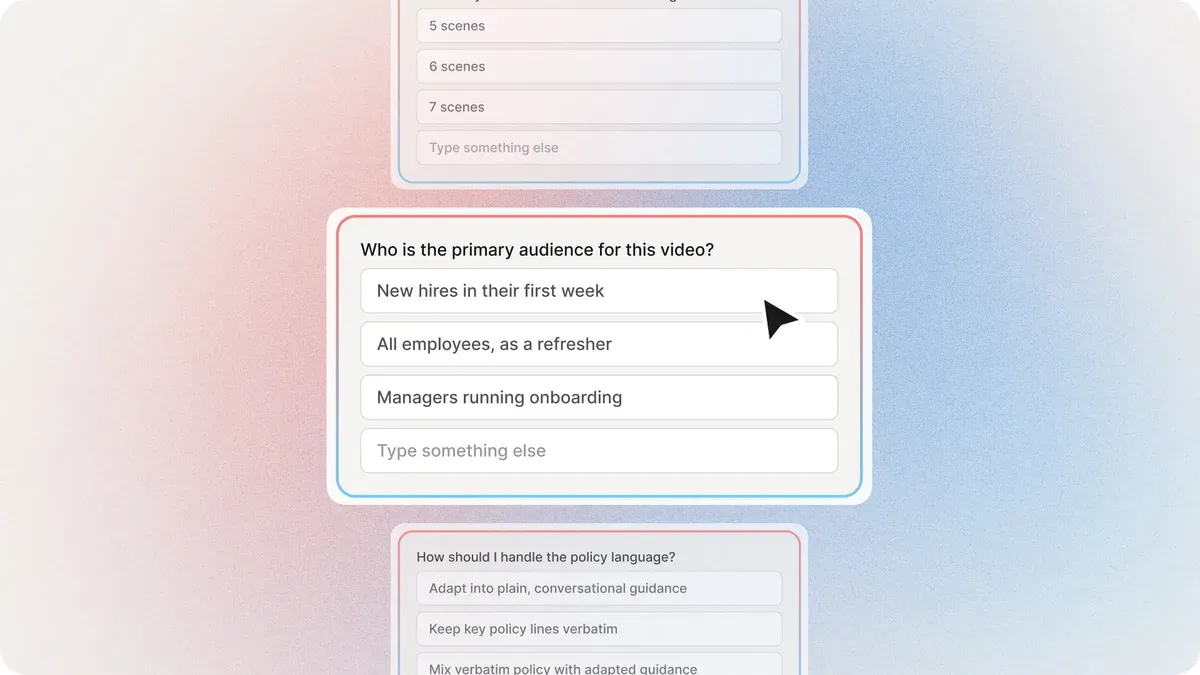
The agent behind it is Cora. Give Cora a source and it drafts a complete video plan, scene by scene, with every scene traced back to the paragraph it came from. Then it stops. Nothing renders until you approve it.
You are not fixing a finished video the tool already committed to. You are shaping a draft before it becomes anything. That is the whole gap between generating and staying in control: you keep the speed of automation without handing over the decisions.
How it works
- Drop in your source. A PDF, a URL, a slide deck, or a script. Cora reads it.
- Get a plan, not a surprise. Cora drafts the scenes and the script, and shows its work. Each scene cites where it came from.
- Shape it. Reorder, rewrite, or retarget a scene, such as “make scene 2 about wire fraud.” There are two checkpoints before anything renders: an outline first, then the full plan.
- Render on your word. Only when you say go. You picked your brand kit at the start, so nothing leaves looking off-brand.
What a good agent won’t do
Staying in control is not one toggle. It is a set of things the agent refuses to do, enforced rather than promised:
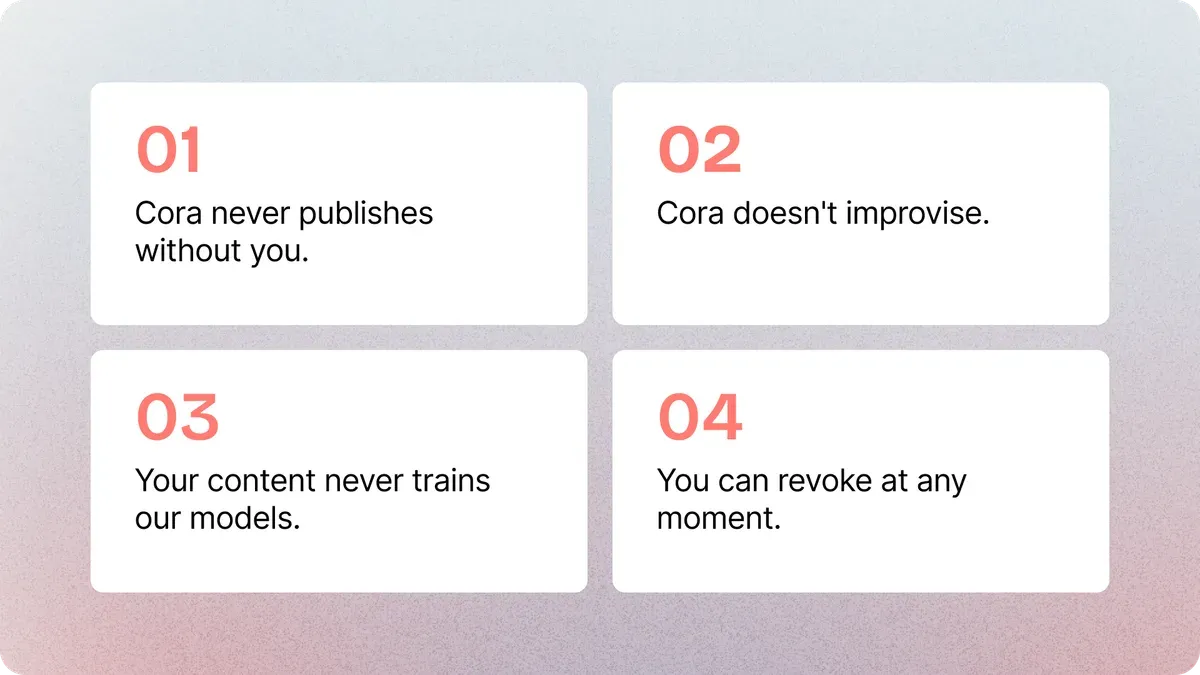
- It never publishes without you. Your draft waits in your workspace until you approve it.
- It never improvises. Every scene comes from your source and cites it, so anyone can trace a claim back.
- It never trains our models on your content. Your inputs stay yours.
- It can be revoked at any moment. Avatars, voices, brand kits, and sources are all opt-in and all revocable, with an audit log you can export.
For training and enablement, where a wrong claim is a compliance problem and off-brand is a trust problem, that restraint is the point.
How Paramount cut training video production from weeks to hours
Paramount replaced manual video production with Colossyan's AI avatars, cutting production time from weeks to hours across their global L&D team.
Read the full story →Why this matters
Teams are already shipping with Cora in early-access waves, and the first thing they mention is not the speed. It is that they trust what comes out.
“The biggest benefit of Colossyan is being able to have training material that never goes obsolete.”
Magesh Sarma, CIO, AmeriSave
That is the shift, stated plainly. Stop generating video you have to fix. Start shaping video you actually trust.
This is also one piece of a bigger belief: knowledge should be alive, not archived. More on that soon.
Cora is rolling out in waves. Join the waitlist when yours opens, or try the AI Video Generator free today.