


Key Takeaways
- The reason customers leave a production agency is the high cost, and the high cost is blocking their ability to scale and to localize.
- Cost and the update cycle are the severe problems. Turnaround is the least bad of the three, because you can fix turnaround by choosing a better partner.
- Buyers price the first version of a video and almost never price the update, and the content goes out of date the moment you release it.
- A cinematic or genuinely important one-time video with marketing implications is a real reason to hire an agency.
- Any platform that promises you don't need any skills anymore is lying, including Colossyan. You need some skills, just far fewer than you needed five or twenty years ago.
Video is a fantastic medium for delivering employee training, whether it is for onboarding or continuing development. Doing it in-house is time consuming, costly and hard to manage, so plenty of companies hire a training video production company to plan, film and edit workplace training materials instead.
I run Colossyan, the AI platform for training and enablement, so I speak most weeks to teams who are either about to hire one of these companies or about to leave one. When a customer tells me they want to stop working with their production agency, the reason is almost always the same. It is the high cost, and the high cost is basically blocking their ability to scale, primarily to localize, plus the back and forth between the agency and their internal team.
That is not an argument against agencies. There is work I would genuinely send to one, and I say exactly where below. You can try Colossyan free, no credit card while you read, if you want to see the other option from the inside.
How we picked these
Looking at these 10 companies, I have actually come up against none of them in a live deal. Not one. Read that as non-overlap rather than as evidence that we are superior, because these firms get hired for work a platform is not the right tool for. My recommendation to hire one of them in the right situation is genuine, and I make it further down.
So the list is built from what is visible rather than from who I have beaten: who recurs across the independent roundups that rank for this phrase, who serves corporate training rather than marketing video with a training line bolted on, and what format each one specializes in. Where a company publishes rates I have quoted the figure and named whose it is. Where it does not, the table says so, because a guessed price does more damage than an admitted gap.
The top 10 training video production companies
Each of these 10 companies offers a different spin. Some animate, some film, and some cover wider work like product demo video creation.
The Type column is the one I would read first. A video production specialist makes the asset. A full-service learning company designs the programme around it, and video is one deliverable among several. The published figures make the gap concrete: the production shops here quote minimum projects of $5,000 to $10,000 plus an hourly rate on top, while SweetRush quotes $45,000 to $65,000 per finished hour of elearning at its lowest complexity tier. Those are not two prices for the same job, and comparing them as though they were is how buyers end up shocked by a quote. The line does run through the middle of a few of these firms, so read the type as where the weight of the business sits rather than as a hard border.
| Company | Type | Best for | Format specialism | Price signal | Weakest point |
|---|---|---|---|---|---|
| 1. Colossyan | Platform, not an agency | Training that must be updated and localized | AI avatar video, screen recording, knowledge checks | Subscription license, see pricing | Not for a cinematic one-off with marketing implications |
| 2. SweetRush | Full-service learning company | A whole learning programme rather than a set of videos | Custom elearning, simulation, immersive learning, video as a component | Publishes $45,000 to $65,000 per finished hour at its lowest tier | Almost no independent review data, and a high floor |
| 3. AllenComm | Full-service learning company | Enterprises wanting design and delivery from one supplier | Instructional design, elearning, video, LMS integration | Does not publish, and Clutch lists minimum and hourly as undisclosed | Three G2 reviews in total, one of them about delays |
| 4. NextThought | Full-service learning company | Regulated and frontline work needing a credible face | Live action with subject matter experts | $5,000 minimum project, $100 to $149 per hour (Clutch) | Live action means every update is a reshoot |
| 5. Demo Duck | Video production specialist | Corporate learning and elearning from one partner | Live action, animation, hybrid | $10,000 minimum project, $200 to $300 per hour (Clutch) | Bespoke work, so a change reopens the shoot |
| 6. Vidico | Video production specialist | Training and marketing video from one partner | Broad, training to crowdfunding to walkthroughs | Publishes $1,000 to $10,000 per finished minute | Training is one of many formats, not the whole shop |
| 7. MindTools Kineo | Full-service learning company | A content library and a custom build in one place | Custom digital learning, content library, LMS delivery | Does not publish pricing for custom work | No clean review profile since the 2025 merger |
| 8. Blue Carrot | Full-service learning company | Animation-led elearning with instructional design | Animation, plus live action and voice recording | Publishes $3,300 to $15,800 per 30 min async elearning | Waterfall process, so late changes are expensive |
| 9. Archipelago Productions | Video production specialist | Larger series needing full pre and post production | Elearning video, case studies, corporate communications | $5,000 minimum project, hourly undisclosed (Clutch) | An update reopens the whole production chain |
| 10. Yum Yum Videos | Video production specialist | Animated explainers that double as internal training | Animated explainer video | Does not publish pricing | Customer-facing explainers first, training second |
Where a cell says a company does not publish pricing, that is the finding rather than a gap in my research. Ask them for a figure, then hold the answer against the ranges further down.
1. Colossyan
Unlike the others here, Colossyan is not a company you hire. It is the platform your own team uses to build training content with AI avatars and voiceovers, which is why the economics differ: no actors, no editors, no directors, no reshoot when a process changes. Select a template, add your script, and the video is generated in minutes, in over 70 languages.
- What it does: document to video, screen recording, conversation mode with several avatars in one scene, avatar hand gestures, knowledge checks.
- Who it suits: teams whose content changes, teams who need more than one language, and teams producing regularly rather than once.
- Pros: an update costs minutes rather than a new project, and localization stops being a budget line.
- Cons: your internal team members have to upskill themselves a bit, and this is not the tool for a cinematic flagship film.
- Price signal: subscription license rather than per finished minute, with the tiers on our pricing page.
Paramount, Continental, Cisco, Johnson & Johnson and UPS all create corporate video content with Colossyan. Schedule a demo to see it against your own material.
2. SweetRush
SweetRush is a custom learning company, founded in 2001 and based in San Francisco, running somewhere between 200 and 221 people. Video and 3D animation are one modality among several here rather than the specialism of the house: the work spans custom elearning, instructor-led and blended training, gamification, simulations, and immersive VR, AR and AI learning. NIIT Learning Systems acquired it outright in January 2026 for up to $26 million including earnouts, which is worth knowing before you sign anything multi-year. Its own case studies name AAFP, SHRM, CHRISTUS Health, Hilton, Coursera and Cruise.
- What they do: custom elearning, instructor-led and blended training, gamification, simulation and immersive learning, with video as one deliverable inside a programme.
- Who they suit: organizations buying a whole learning programme rather than a set of videos.
- Pros: 12 consecutive years on Training Industry’s Top 20 Custom Content Development list, 259 Brandon Hall HCM Excellence awards of which 195 are gold, and first place on eLearning Industry’s Immersive Learning list for the fifth year running in 2026.
- Cons: there is almost no independent review data to hold any of that against. SweetRush keeps a G2 profile with zero reviews on it and has no Clutch profile at all, so no third-party-verified minimum or hourly rate exists anywhere. The floor is also high.
- Price signal: SweetRush publishes a full rate card, which almost nobody in this category does. Level 1, low complexity, is $45,000 to $65,000 per finished hour of elearning. Level 2, medium, is $65,000 to $100,000. Level 3 and above, high complexity or simulation, is $120,000 to $180,000.
3. AllenComm
AllenComm is a custom corporate training company, founded in 1981 and based in Salt Lake City, and it claims the largest in-house L&D design team in the country. Instructional design sits at the front of the offer, with video production, LMS integration and L&D staffing behind it, and the company counts more than 3,400 projects for 530 clients across 45 years. Its portfolio names Delta Air Lines, Nestle, PG&E, HP, Freddie Mac, Kraft Heinz, LEGO, PNC, Korn Ferry and Panera.
- What they do: instructional design, custom elearning, video production, LMS integration and L&D staffing.
- Who they suit: enterprises that want the design work and the delivery infrastructure from the same supplier.
- Pros: 45 years of trading, more than 600 awards, Training Industry Top 20 placings in six categories, and 30 Brandon Hall Excellence awards in 2026 alone including 8 gold, the most in the company’s history.
- Cons: the independent review data is thin enough to be unusable. G2 states outright that there are not enough reviews of AllenComm for G2 to provide buying insight, three exist in total, and one of those three flags a lack of timely communication and follow-ups causing project delays.
- Price signal: none published. Clutch lists both minimum project size and hourly rate as undisclosed. AllenComm published an article in April 2026 on what custom elearning costs, and it declines to give a figure for its own work, citing the Chapman Alliance ratio of 80 to 300 production hours per finished hour instead.
4. NextThought
NextThought is a corporate training video production company working across safety training, new employee onboarding and corporate communications. Its distinctive move is access to subject matter experts who will star in your videos, which matters more than polish wherever the presenter has to be believable.
- What they do: live action training video with industry experts on camera.
- Who they suit: healthcare, logistics and trucking, non-profit, telecommunications, consumer goods and retail, manufacturing and construction.
- Pros: a credible expert on screen is hard to fake, and in regulated work that carries weight.
- Cons: anything filmed has to be refilmed when it changes, which is the update cycle problem in its purest form.
- Price signal: its Clutch profile lists a minimum project of $5,000 and an hourly rate of $100 to $149.
5. Demo Duck
Demo Duck is a corporate video production company covering corporate learning content such as retail training videos and elearning content. It offers live action and animation, plus a hybrid that blends the two, which is what it built for Newsela.

Source: Newsela
- What they do: live action, animation, and hybrid training and elearning video.
- Who they suit: teams who want one partner covering both corporate learning and platform content.
- Pros: genuine format range, so the medium follows the message rather than the other way round.
- Cons: hybrid production is bespoke, so a change reopens the expensive part.
- Price signal: its Clutch profile lists a minimum project of $10,000 and an hourly rate of $200 to $300.
6. Vidico
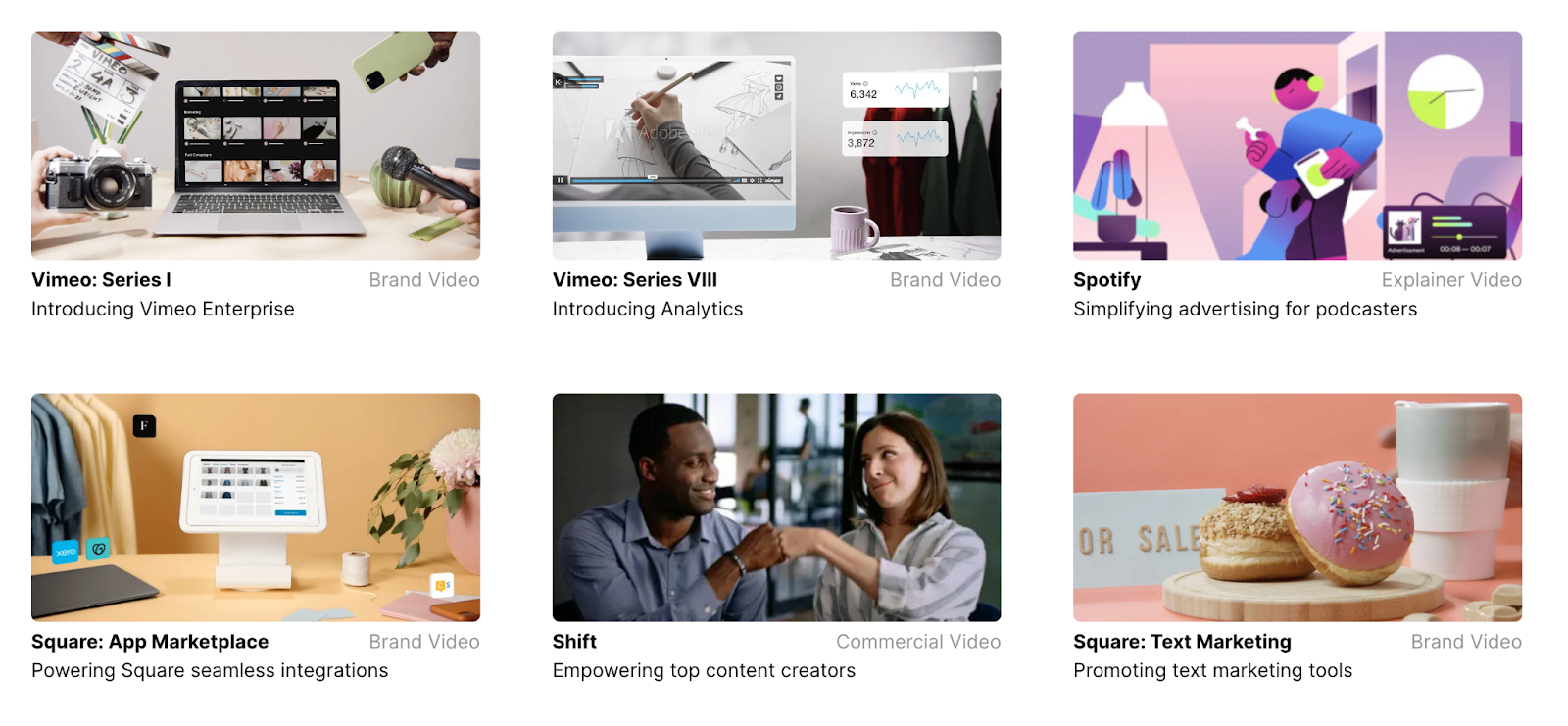
Vidico has produced training videos, crowdfunding videos, social content and product walkthroughs for enterprise companies including Square, Spotify and Airtable. Breadth is the reason to consider it: it can create employee training videos now and customer case studies or testimonial videos later.
Source: Vidico
- What they do: full-service corporate and training video across most formats.
- Who they suit: companies consolidating training and marketing video with one partner.
- Pros: one relationship covers several content types, and its cost guide is unusually open.
- Cons: training is one line in a broad catalogue rather than the specialism of the house.
- Price signal: Vidico publishes $1,000 to $10,000 per finished minute for corporate video, with basic projects between $1,500 and $5,000.
7. MindTools Kineo
MindTools Kineo was formed by the May 2025 merger of Mindtools, a leadership and management skills content library sold as a membership, with Kineo, a custom digital learning business that also delivers Totara and other LMS work. It is headquartered in London and runs at somewhere between 217 and 250 staff depending on which source you take. Video, animation and podcasts are components of a custom programme here rather than the thing being sold. Its client stories name the University of Miami, Kmart Group, Reece Group, Golden Charter, Novanta, LV=, South Western Railway, Wickes, Virgin Trains and Burberry.
- What they do: custom digital learning, a subscription content library, managed learning services and LMS delivery, with video as a component.
- Who they suit: organizations that want an off-the-shelf library, a custom build, and the platform to run both, from one supplier.
- Pros: 2026 Training Industry Top 20 in two categories at once, Custom Content Development and Learning Services, Triple Gold at the 2026 Totara Awards, and a combination of library, custom build and delivery that is genuinely unusual.
- Cons: it is the newest merger on this list and the public data shows it. There is no clean current G2 or Clutch profile for the combined entity, and the G2 page filed under Kineo is contaminated with an unrelated Adelaide contractor-safety company, so all four visible reviews there are for a different product.
- Price signal: none published for custom or video work. The only public figure is the individual Mind Tools content subscription at $25 a month, which is a separate product line and tells you nothing about what a custom build costs.
8. Blue Carrot
Blue Carrot is a media production agency covering marketing and ad video, animated explainers, and elearning and training video. The offering leans towards animation, though it also films live action. It runs a waterfall methodology that starts upstream with instructional design and storyboarding, then owns production and voice recording.
- What they do: animation-led elearning and training video, with instructional design included.
- Who they suit: teams who want the design thinking done for them rather than handing over a finished script.
- Pros: animation is easier to amend than film, and the instructional design is work most agencies skip.
- Cons: waterfall means the plan is fixed early, so a late change costs more than it would elsewhere.
- Price signal: Blue Carrot publishes $3,300 to $15,800 per 30 finished minutes of asynchronous elearning, and $3,000 to $7,000 per 60 minutes of instructor-led training.
9. Archipelago Productions
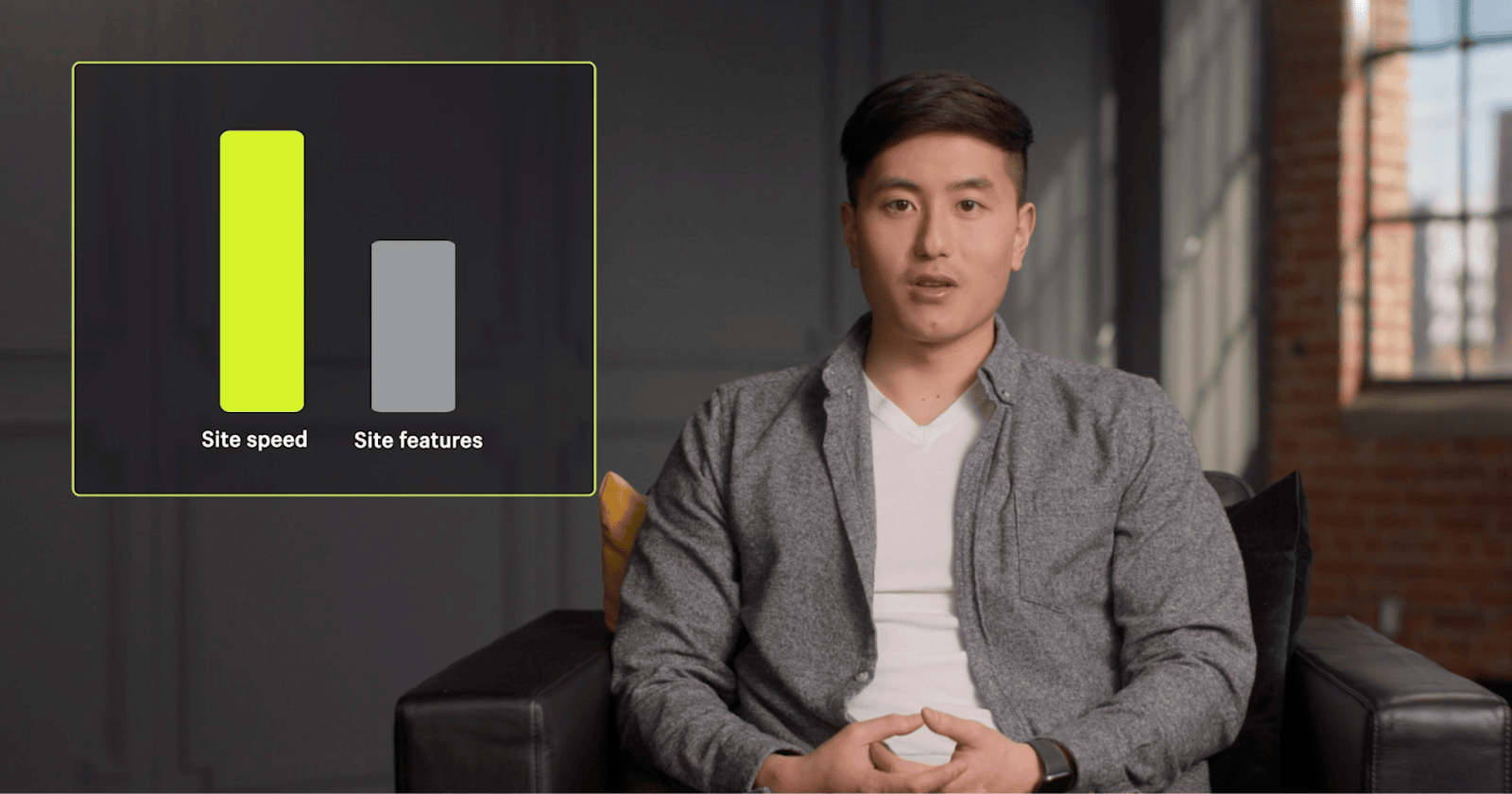
Archipelago Productions is a Toronto studio covering elearning video, case studies, product ads, social campaigns and corporate communications. Its best-known elearning work is the Shopify Plus Academy, a series built to help merchants learn about ecommerce and online sales.
Source: Archipelago Productions
- What they do: full studio production, from concept development and wardrobe design to sound design and color grading.
- Who they suit: organizations commissioning a substantial series rather than a single module.
- Pros: the whole chain sits with one studio, which keeps a long series consistent.
- Cons: the same chain reopens for an update, and every stage costs again.
- Price signal: its Clutch profile lists a minimum project of $5,000 and does not disclose an hourly rate.
10. Yum Yum Videos
Yum Yum Videos is an animated explainer agency with over 12 years in the business and clients including American Express, Google and RedBull. Its main focus is customer-facing explainers, but the same team supports internal training video.
- What they do: animated explainer video, applied to training as a secondary use.
- Who they suit: companies who want their internal training to look like their external marketing.
- Pros: animation is easy to edit and update as internal policies or processes change, which is a genuine advantage over film.
- Cons: training is not the centre of the practice, so expect explainer conventions rather than instructional design.
- Price signal: none published. Its site says pricing varies because every video is built from scratch around your goals, style and timeline, and it routes you to a cost calculator or a call instead.
What training video production costs in 2026
Almost nobody publishes these numbers, so start with the people who do.
Digital Applied reports median production cost falling from $4,200 to $2,500 per finished minute where AI tools are in play. Vidico, number 6 on this list, publishes $1,000 to $10,000 per finished minute for corporate video, with basic projects between $1,500 and $5,000. D-MAK Productions breaks it down by format: $500 to $1,500 per minute for talking head, $2,000 to $8,000 for 2D animation, and $10,000 or more per minute for interactive branching. Blue Carrot, number 8 on this list, quotes $3,300 to $15,800 for 30 finished minutes of asynchronous elearning and $3,000 to $7,000 per 60 minutes of instructor-led training.
Two of those four are companies this article ranks, which is why I named whose figure each is: read them as vendor-published ranges, not a market survey.
Then there is the charge nobody models. An ongoing retainer fee is something we come across often, and that is what blocks some of the budget criteria before a project even starts. You approve a number for the videos and then meet a second number for the relationship.
There is a bigger omission than the retainer. What buyers get wrong is definitely the update cycle, and accounting for the cost of updates. The content you create goes out of date the moment you release it, in today’s ever changing world, and the second version costs roughly what the first one did, because you are applying the training agency cost to it all over again. Cost, turnaround and the update cycle are all quite bad, and cost and the update cycle are the severe ones. Turnaround is the least bad, because turnaround can be optimized: you are choosing a better partner. The cost is tremendous by comparison, and typically these are the orders in which our customers are facing this issue. That is the thing to nail before you sign anything.
Sonesta puts it from the customer side better than I can. Their case study describes an industry where rapid changes demand frequent and costly reshoots.
Corporate training video production: what changes at enterprise scale
One video is a project. Corporate training video production is a rollout, and everything that is merely annoying at one video becomes structural at fifty.
Compliance changes first. Legal reviews the script, the review produces changes, and with an agency every round of changes is a change order. Multi-site is next: what plays in one region needs different examples, different names, sometimes a different presenter, so a rollout means one core module in many local versions.
Then languages. When an L&D team says they need this in 12 languages, agencies really struggle. They cannot keep themselves as cost effective as possible at that count, the per-language cost is significantly higher than the single-language quote implies, and normally some agencies apply AI video solutions themselves at that point, sometimes platforms like ours, because the arithmetic of filming twelve times does not work for anyone.
Sonesta is the concrete version of all three, and it is important to highlight that their process before was really manual, time consuming and also costly, and they couldn’t really localize any of their video content. Their case study describes replacing an agency stack with Colossyan Learn, and they cut 80% of video production costs while creating and updating multilingual training for a global hospitality workforce. Kristin Broadhead, their Director of Learning and Development, put it this way: “Colossyan’s AI technology and its translation capabilities have revolutionized our training processes, especially in a multi-lingual environment like ours.”
The corporate buying process adds rounds of its own before a camera is booked. Procurement wants the rate card, the change-order terms and the ongoing retainer fee written into the contract. Security review wants to know where your scripts, your footage and your employee data sit. Accessibility requirements arrive with their own checklist, and they apply to every local version rather than the flagship one. Stakeholder sign-off multiplies the rest, because a corporate rollout has legal, brand, IT and a business owner in each region, and every one of them can send the script back.
Brand consistency across regions is underpriced in the same way. Every local version is another chance for someone to ship last year’s logo or last year’s process, and with an agency each correction is another round at agency rates. This is where the two quote structures pull apart. The production specialists here quote a $5,000 to $10,000 minimum project with an hourly rate on top, which prices one asset. SweetRush quotes $45,000 to $65,000 per finished hour of elearning at its lowest tier, which prices a programme. Multiply either shape by a multi-site rollout, then by twelve languages, then by the updates you will be buying every year, and you have the number an enterprise buyer should be comparing.
Enterprise buyers should price the internal side too. The back and forth between the agency and your internal team never appears on the invoice, and at scale it is the cost that quietly eats your quarter.
Alternatives to a training video production company
Not convinced outsourcing is right? Four alternatives that organizations make work:
1. Build an in-house team
An in-house team gives you far more control, and at high volumes it can beat outsourcing on cost, especially if you rent equipment rather than buy it. The catch is that most organizations do not produce training videos often enough to justify building that expertise. It is a double-edged sword: a large investment in equipment and people, against the upside of better-equipped staff.
2. Work with freelancers and contractors
If you are confident orchestrating production yourself, contractors and freelancers can get you high-quality video without an agency. Each is highly specialized, on camera or in the edit, so you are managing several heads and owning everything from ideation to final approval. That is a job in itself, and somebody has to do it.
3. Try your hand with students
Film students are more affordable and can produce decent results, depending on your goals and their experience. You will need production judgement of your own, but it works on a limited budget, or when you want demo material to guide a professional shoot later.
4. Move to an AI platform
The main alternative to a production company is running it yourself on a platform. With Colossyan you can generate a video from a few prompts, choose from over 150 avatars, draft a script with an AI assistant, record your screen, produce voiceovers in many accents and languages, and add knowledge checks. For the mechanics rather than the vendor list, our guide to training video creation walks through all five stages.
Production company or AI platform: how to decide
How Sonesta cut 80% of video production costs
Sonesta replaced traditional video production with Colossyan's AI avatars, cutting costs by 80% while scaling content across their hotel properties.
Read the full story →Start with where I would send you to an agency, because that case is real. Primarily cinematic work, or a really important one-time video creation that also has marketing implications. That is an area where I would genuinely recommend an agency, and no platform, ours included, is the right answer for it.
Everything else comes down to the update cycle and scalability, and these four questions are how you measure both for your own team.
- Update frequency. If the content is stable for years, an agency is fine. If a policy, a product or a process changes it two or three times a year, you are buying that video again and again.
- Number of languages. One language, either option works. Beyond about three, per-language production cost is the whole decision.
- Volume per year. A handful of videos is a project. Twenty or more is an operation, and operations want a repeatable process rather than a series of briefs.
- SME availability. If your subject matter experts can give you a day on camera, an agency can use it. If you can only get 30 minutes on a call, you need a process that turns that into a video without a shoot.
Answer those four honestly and the choice is usually clear. There is a tradeoff on the platform side, though, and I would rather say it than let you find out later. Your internal team members have to upskill themselves a bit. Any platform that promises you don’t need any skills anymore is lying, and that includes Colossyan: for Colossyan you need some skills. Of course not as many as you would have needed 20 years ago, or even five years ago, because AI has really made the space more exciting and easy to start with, and that is definitely helping. Now is the easiest time ever to move from an agency to a platform, but you are still moving the work in-house rather than making it disappear.
The whole thing in one sentence: it comes down to how easily you can keep your content current and scale it, and that is easier with a platform than with an agency.
Where Colossyan fits
Hiring a training video production company gets you professional content without buying equipment or building a team, and for a flagship film that is the right call. For a training library it usually means content that goes out of date and costs too much to update every time a role or a process changes. That, rather than the video itself, is the problem worth solving.
Colossyan is the AI platform for training and enablement. Your team starts from pre-built templates, enforces your brand guidelines, ships in several languages at once, and builds scenario-based training in minutes. Cost and the optimization of internal processes are what our customers come to us for, and no single solution covers both a cinematic launch film and a library that changes every quarter.
See what it does with your own material: deliver better training videos in hours rather than weeks.
Frequently asked questions
It depends almost entirely on the format. D-MAK Productions publishes $500 to $1,500 per finished minute for talking head video, $2,000 to $8,000 per minute for 2D animation, and $10,000 or more per minute for interactive branching scenarios. Digital Applied reports the median production cost falling from $4,200 to $2,500 per finished minute where AI tools are used. Whatever number you land on, budget the updates as well as the first version.
Vidico publishes $1,000 to $10,000 per finished minute for corporate video, with basic projects landing between $1,500 and $5,000. Blue Carrot publishes $3,300 to $15,800 for 30 finished minutes of asynchronous elearning. The charge that surprises buyers most, in my experience, is the ongoing retainer fee on top of the project price.
Corporate video production is video made for a business rather than for broadcast or entertainment: onboarding, compliance, safety, internal communications, product walkthroughs, recruitment and customer stories. Corporate training video production is the training slice of that, and it behaves differently from the rest, because training content has to be kept current, rolled out across sites, and often delivered in several languages.
If you are the one producing, the published ranges are your reference band. D-MAK Productions puts talking head work at $500 to $1,500 per finished minute and 2D animation at $2,000 to $8,000. Blue Carrot puts instructor-led training at $3,000 to $7,000 per 60 minutes. Price by finished minute and by format, and price revisions separately, because that is where the real work sits.
In the production sense, yes. A training video production company charges for the work, normally per finished minute or per project, and often on a retainer as well. If you mean whether an employer has to pay staff for time spent watching mandatory training, that depends on your jurisdiction and your employment contract, and it is a question for your employer or an employment lawyer rather than for a video company.